

Views: 0 Author: Site Editor Publish Time: 2026-08-31 Origin: Site


The physical size of a rotary polisher’s backing plate and pad dictates the fundamental physics of paint correction. It directly impacts peripheral speed, heat generation, and operator control. When deciding on a 6 inch vs 7 inch rotary polisher, you must evaluate the specific demands of your daily workload. Selecting the wrong polisher size for a specific application leads to inefficient correction times and increased operator fatigue. It also creates a significantly higher risk of catastrophic paint damage, commonly known as burn-through, on modern clear coats. Understanding the mechanical differences between these two sizes helps optimize shop workflow and ensures paint safety. We will evaluate 6-inch and 7-inch rotary polishers, analyzing their performance metrics, optimal use cases, and operational trade-offs to help detailing professionals and body shops standardize their tooling.
Peripheral Speed Physics: At identical RPMs, a 7-inch pad generates higher outer-edge speeds than a 6-inch pad, resulting in faster cutting but significantly higher heat generation.
Precision vs. Efficiency: 6-inch setups offer superior agility for modern, heavily contoured vehicle panels, while 7-inch setups excel in high-volume, large-surface applications like marine, RV, or commercial fleet detailing.
Pad Ecosystem Standardization: Standardizing on a 6-inch platform often aligns better with existing dual-action (DA) pad inventories, reducing overhead costs for professional shops.
Risk Profile: The 7-inch rotary carries a steeper learning curve and higher risk of edge-burn, requiring highly experienced operators to manage the aggressive cut.
The core objective of rotary polishing is maximizing defect removal efficiency without compromising clear coat integrity. Automotive paint correction requires a delicate balance between aggressive mechanical leveling and thermal management. A rotary machine drives a pad in a direct, forced circular motion. This direct drive mechanism transfers motor torque straight to the paint surface, generating rapid friction. If the pad is too large for the specific panel, that friction quickly transforms into excessive heat. High temperatures soften the clear coat and increase the likelihood of permanent damage. Technicians must match the pad diameter to the panel geometry to maintain safe operating temperatures while achieving the desired cut. Modern clear coats are often thinner than older single-stage paints, leaving very little room for error. You might only have 1.5 to 2 mils of clear coat to work with. Generating too much heat on a plastic bumper cover can cause the paint to twist and peel right off the substrate.
Paint correction relies on three primary mechanical factors when using a rotary machine:
Friction Generation: The physical rubbing of the abrasive particles against the clear coat to level defects.
Thermal Management: Keeping the surface temperature below the threshold where the paint structure begins to fail or twist.
Abrasive Breakdown: Providing enough sustained movement to properly crush diminishing abrasives so they finish down cleanly without leaving heavy compounding haze.
Operator ergonomics and physical fatigue play a massive role in consistent correction quality. Operating a rotary polisher over an eight-hour shift places significant strain on the shoulders, forearms, and wrists. Larger pads generate a stronger gyroscopic effect. As the wide pad spins, it resists changes in direction, fighting the operator's movements. The increased surface area creates higher friction against the paint, causing the machine to pull or walk across the panel. Managing this rotational pull requires constant muscular tension. Selecting a pad size that minimizes this fight without sacrificing cutting speed keeps your technicians fresh. A tired operator is far more likely to tilt the pad, catch an edge, and burn through the paint late in the afternoon.
Modern vehicle profiles demand high versatility from correction tools. Decades ago, vehicles featured expansive, flat hoods, wide doors, and broad quarter panels. Today's automotive designs incorporate sharp aerodynamic body lines, complex curves, deep intakes, and heavily contoured side skirts. A tool designed purely for flat-surface efficiency will struggle to navigate these modern obstacles. The edge of an oversized pad can easily strike adjacent panels or burn through the thin paint on sharp character lines. Shops need equipment that can adapt to both the broad hood of a truck and the intricate bumper of a sports car. You cannot effectively polish a modern front fascia with a massive pad; the geometry simply does not allow it.
Tool arsenal synergy dictates purchasing decisions. Many modern detailing operations rely heavily on Dual Action (DA) polishers for their safety and finishing capabilities. The dilemma arises when heavy defect correction is required, prompting the integration of a rotary machine. Choosing the right rotary size ensures it fills the heavy-cut gap without creating redundant tool categories. You do not want to force the shop to maintain entirely separate ecosystems of pads and backing plates. The goal is a streamlined tool cart where every machine serves a distinct, non-overlapping purpose.
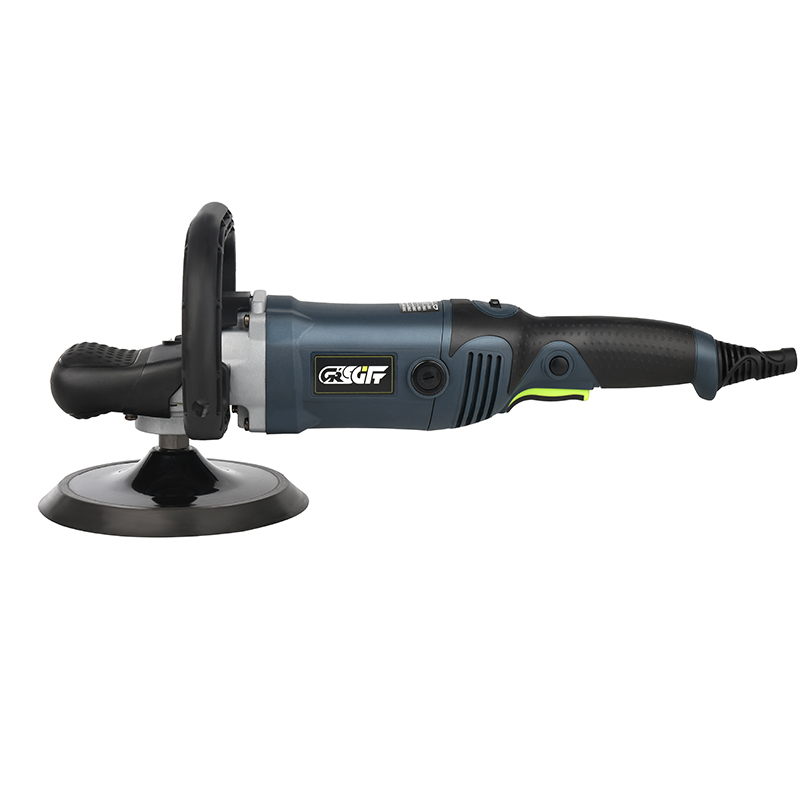
The performance characteristics of a 6 inch rotary polisher revolve around its reduced diameter, which fundamentally alters the physics of the cut. Because the outer edge of a 6-inch pad travels a shorter distance per revolution compared to a larger pad, its maximum peripheral speed is lower at any given RPM. This reduction in edge speed translates directly to a more controllable cut and highly manageable heat generation. The operator can maintain consistent pressure without the constant fear of sudden temperature spikes. This makes it a highly predictable tool for intricate paint correction. You can lean into a heavy scratch on a door panel without instantly superheating the surrounding clear coat.
When outfitting a 6-inch rotary, technicians typically cycle through specific pad types based on the defect severity:
Heavy Cut Twisted Wool: Used for removing deep sanding marks and severe oxidation. The 6-inch size keeps the aggressive wool fibers concentrated.
Dense Foam Cutting Pads: Ideal for moderate swirl removal on hard European clear coats. The foam structure retains the compound against the paint.
Soft Finishing Foam: Used at low RPMs for jeweling the paint to a high gloss, removing any faint holograms left by the cutting stage.
This size excels in standard automotive detailing environments. The compact footprint allows the technician to navigate tight areas that would be impossible or highly dangerous with a larger pad. Ideal use cases include polishing narrow A-pillars, navigating around complex bumper vents, and correcting heavily contoured side panels. The 6-inch diameter provides enough surface area to make reasonable progress on flat panels while remaining agile enough to dip into concave curves. The rigid backing plate is much less likely to strike the paint when working inside a curved door shell. You get the heavy leveling power of a rotary without feeling like you are wrestling a massive floor buffer on a delicate sports car.
Operational trade-offs exist. The primary limitation is slower correction times on massive, flat panels. When tackling the expansive roof of a full-size SUV or the broad bed sides of a pickup truck, the smaller surface area requires more passes to cover the same square footage. Because there is less foam or wool volume, the pad saturates with spent clear coat, polishing oils, and abrasives much faster. Technicians must blow out or swap 6-inch pads more frequently to maintain optimal cutting performance. A saturated pad stops cutting and starts hydroplaning over the paint, generating heat without removing defects.
Despite these limitations, the 6-inch setup remains the most versatile choice for standard auto body work. It lacks the sheer leveling mass required to tear through extreme marine oxidation in record time, but it provides the precise control necessary for modern automotive clear coats. It strikes the ideal balance, offering enough bite for severe scratch removal while mitigating the risks associated with high-speed rotational friction. For a shop handling daily drivers, collision repairs, and high-end exotics, this is the workhorse size.
The 7 inch rotary polisher is defined by its aggressive nature and massive surface area. The physics of a larger radius dictate that the outer edge of the pad travels further and significantly faster per revolution than a smaller pad. This high peripheral speed maximizes cutting power, allowing the abrasives to level severe defects rapidly. Contrast this continuous, high-speed RPM friction against the safer, oscillating motion of large-throw DAs. The 7-inch rotary delivers relentless, focused mechanical energy directly into the surface. It is an absolute powerhouse for heavy leveling on hard materials.
The massive footprint of a 7-inch pad is specifically designed for large-scale projects:
Center Console Boats: The wide, flat sides of fiberglass hulls require maximum surface area coverage to remove heavy chalky oxidation efficiently.
Class A Motorhomes: These massive vehicles feature huge stretches of flat gel coat that would take days to correct with a smaller machine.
Commercial Box Trucks: Fleet maintenance requires speed over absolute perfection, making the 7-inch rotary the ideal tool for rapid gloss enhancement on flat aluminum or fiberglass panels.
This tool is specifically positioned for industrial applications and heavy-duty correction environments. It is the undisputed champion of gel-coat marine detailing. Boat hulls feature massive, uninterrupted stretches of thick, hard gel coat that suffer from severe UV oxidation. A 7-inch wool pad on a rotary machine can cut through this chalky oxidation efficiently, saving hours of labor compared to smaller setups. RV oxidation removal, commercial fleet detailing, and large aircraft polishing benefit immensely from the expansive footprint of a 7-inch pad. When you have forty feet of flat fiberglass to compound, a smaller pad will cost you an entire day of lost productivity.
The operational trade-offs of the 7-inch platform are significant and require immense respect. The high peripheral speed dramatically increases the risk of hologramming. These are the three-dimensional micro-marring trails left behind by the aggressive rotational cut. More critically, the danger of burning paint on panel edges is severe. Because the edge of the pad is moving so fast, momentary contact with a raised body line can strike through the clear coat in a fraction of a second. The sheer size of the pad increases friction and rotational pull. This requires increased physical strength and stamina from the operator to control pad hop and keep the machine running flat.
Using a 7-inch pad on modern, contoured cars is generally inefficient and risky. The pad will frequently bridge across concave curves, meaning only the edges make contact. This focuses all the machine's pressure and heat onto two narrow lines, almost guaranteeing a burn-through. This setup belongs in environments where flat surface area is abundant and the coating being corrected is thick enough to withstand aggressive, high-speed leveling. Keep it off delicate automotive clear coats unless you are working on a completely flat, heavily oxidized single-stage hood.
Evaluating these two platforms requires a deep dive into power specifications, thermal dynamics, and business scalability. The physical size of the pad directly influences the mechanical demands placed on the machine itself. You cannot simply slap a massive pad on a weak motor and expect good results.
Motor requirements scale directly with pad size. Driving a 7-inch pad through heavy compounding requires immense torque. If the motor is underpowered, the friction of the large pad against the paint will cause the machine to bog down. This drops the RPMs and results in an inconsistent cut. A robust 1600W rotary polisher is often necessary to maintain sustained torque under load with a 7-inch setup. A 6-inch pad generates less surface friction and may require less sustained amperage, though a powerful motor still ensures smoother operation. When you press down to remove a deep scratch, you need the machine to power through without stalling.
Spindle thread compatibility is another critical dimension. The industry standard M14 rotary polisher spindle thread allows for seamless interchangeability of backing plates. This standard is common in Europe and Asia, with 5/8"-11 being the North American equivalent. This standardization means a single machine can theoretically run multiple pad sizes. You are not locked into a proprietary system.
Backing plate versatility offers a distinct advantage for high-torque machines. A powerful 1600W unit designed to handle a 7-inch pad can easily be stepped down to a 6-inch or even 5-inch backing plate for spot correction. This multi-purpose capability provides an excellent solution for shops on a budget. They can purchase one heavy-duty machine and adapt it to various tasks simply by swapping the backing plate. Running a smaller pad on a big motor means the machine barely works up a sweat, extending its lifespan.
The heat profiles of the two sizes differ fundamentally. On a rotary machine, a smaller pad is generally less aggressive because the edge speed is lower. The heat is concentrated in a smaller area but is generated at a slower rate. A 7-inch pad generates massive heat at its outer edges due to the high velocity. While a smaller pad on a rotary is less aggressive, a smaller pad on a DA polisher concentrates the oscillation force into a smaller footprint, often making it more aggressive. Understanding this inverse relationship is vital when transitioning between machine types. You cannot apply DA logic to a rotary buffer.
The financial impact of stocking consumables cannot be ignored. Pads are a recurring expense. Assessing the cost of stocking large 7-inch wool and foam pads versus integrating 6-inch rotary pads into an existing ecosystem is a major business consideration. Many shops already run 5-inch or 6-inch DA polishers. Standardizing on a 6-inch rotary platform allows the business to utilize the same pad inventory across both DA and rotary machines. This drastically reduces overhead costs and simplifies inventory management. You do not want your technicians wasting time searching for a specific size pad that only fits one machine in the shop.
Operational Metrics Comparison
Operational Metric | 6-Inch Setup | 7-Inch Setup |
|---|---|---|
Peripheral Edge Speed | Moderate | High |
Heat Generation Rate | Manageable on modern clear coats | Rapid |
Operator Fatigue Level | Low to Medium | High |
Ideal Surface Type | Contoured automotive panels, bumpers | Flat marine hulls, RVs, commercial fleets |
Pad Saturation Rate | Fast | Slow |
Motor Torque Requirement | Standard to High | Very High |
Deploying rotary polishers introduces significant risks to the paint surface. The direct-drive nature of the tool means there is no safety mechanism to stop the pad from spinning if too much pressure is applied. Managing paint burn and hologram risks requires strict adherence to proven techniques. You cannot hand a rotary to a new hire and expect them to figure it out on a customer's car.
Mitigating the aggressive nature of these tools starts with technique. Operators must utilize the Zenith point technique. This involves starting at a low RPM to spread the compound, gradually increasing the speed to peak RPM for the actual cutting phase, and then reducing the speed again to refine the finish and minimize holograms. Managing RPMs is critical. Running a 7-inch pad at maximum speed on a modern clear coat is a recipe for instant burn-through. Keeping the pad perfectly flat against the panel distributes the friction evenly. Tilting the pad focuses all the rotational energy onto a tiny sliver of the edge, rapidly spiking temperatures and cutting through the paint.
Transitioning technicians from DA to rotary platforms presents a steep learning curve. The forgiving nature of free-spinning or even forced-rotation DA polishers does not translate to the high-speed outer edge of a professional rotary polisher. A DA will stall or bog down if handled improperly, saving the paint. A rotary will simply keep spinning, burning through the clear coat in seconds. This risk is magnified exponentially when utilizing a 7-inch setup. Strict supervision, mandatory training on scrap panels, and a phased introduction to live customer vehicles are non-negotiable requirements for any shop implementing rotary tools. You must build muscle memory before touching a live panel.
The internal construction of a rotary machine dictates its longevity and performance under load. When evaluating a rotary polisher supplier, professionals must look beyond external aesthetics and focus on mechanical engineering. A shiny plastic casing means nothing if the gears inside are made of soft metal.
Build quality and internal gearing are paramount. Precision-machined, CNC-cut gears are essential to reduce vibration. Cast gears often have micro-imperfections that cause the machine to chatter at high speeds. This transfers vibration directly into the operator's hands and causes severe fatigue. Heat-treated internal components ensure the gear housing can withstand the massive thermal loads generated during heavy compounding sessions. A well-ventilated head unit is also critical to pull heat away from the motor and gear assembly. If the head of the polisher gets too hot to touch after ten minutes of use, the internal components are cooking.
Maintaining your rotary polisher ensures it survives the daily abuse of a busy shop. Implement these basic maintenance steps:
Blow Out the Vents: Use compressed air daily to clear compound dust and wool fibers from the motor cooling vents.
Inspect Carbon Brushes: Check the brushes every few months. Worn brushes will cause the motor to stutter and eventually fail.
Check the Power Cord: Look for cuts or exposed wires near the base of the handle, a common failure point from wrapping the cord too tightly.
The cost-to-value ratio must be assessed based on shop volume. A low-volume enthusiast might survive with a budget-friendly unit, but a high-volume collision center requires premium, professional-grade tools. Investing in a high-end machine yields a better return through reduced downtime, faster correction speeds, and less operator fatigue. Cheap motors burn out quickly under the load of a 7-inch pad. This turns a budget purchase into a recurring expense.
Warranty and after-sales support are critical factors for commercial operations. A robust commercial warranty protects the business from manufacturing defects. Access to consumable parts, specifically replacement carbon brushes, is vital. Carbon brushes wear down naturally over time. A supplier that provides easy access to these replacements ensures the machine can be serviced in-house without lengthy repair delays. Responsive technical support further guarantees that any operational issues are resolved quickly, keeping the shop floor moving.
Audit your current pad inventory to determine if a 6-inch rotary platform can utilize your existing DA pads to reduce consumable overhead.
Assess your most common vehicle profiles to decide if you need the agility of a 6-inch setup or the broad leveling power of a 7-inch setup.
Consult with a reputable supplier to verify motor torque specifications, ensuring the machine can handle your chosen pad size without bogging down under load.
Implement mandatory scrap-panel training for any technician transitioning from dual-action machines to forced-rotation rotary platforms.
A: Yes. Most professional rotary polishers utilize a standard spindle thread. If the machine has a powerful motor designed for a 7-inch pad, stepping down to a 6-inch backing plate is highly effective and puts less strain on the motor.
A: No. On a rotary polisher, a smaller pad cuts slower because its outer edge has a lower peripheral speed compared to a larger pad at the same RPM. This is the opposite of a DA polisher, where smaller pads can concentrate oscillation force.
A: The global industry standards are the M14 thread, predominantly used in Europe and Asia, and the 5/8"-11 thread, which is the standard across North America. Always verify your machine's spindle size before purchasing aftermarket backing plates.
A: It is generally not recommended for modern cars. Modern vehicles feature complex curves and thin clear coats on sharp body lines. The high edge speed and massive footprint of a 7-inch pad drastically increase the risk of burning through the paint.
A: This pulling is caused by the rotational friction of the pad against the paint. Larger pads generate more friction and a stronger gyroscopic effect, making them pull harder. Keeping the pad perfectly flat and using adequate lubrication helps minimize this walking effect.
A: Yes, provided the backing plate matches the pad's hook-and-loop diameter. However, rotary-specific pads often lack the center cooling hole found on DA pads and may feature different foam structures designed to handle sustained rotational heat rather than oscillation stress.


